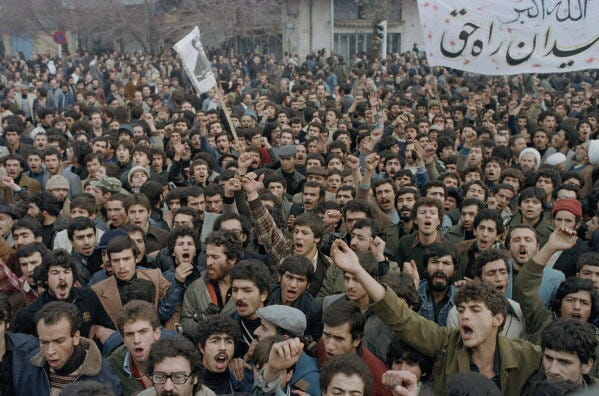
Sacred Echoes, Secular Currents (Part 1)
In this special issue, we map the intellectual, cultural and political history of Iran until today's challenges faced by the theocracy, fully illustrated by pictures taken by the interviewee!

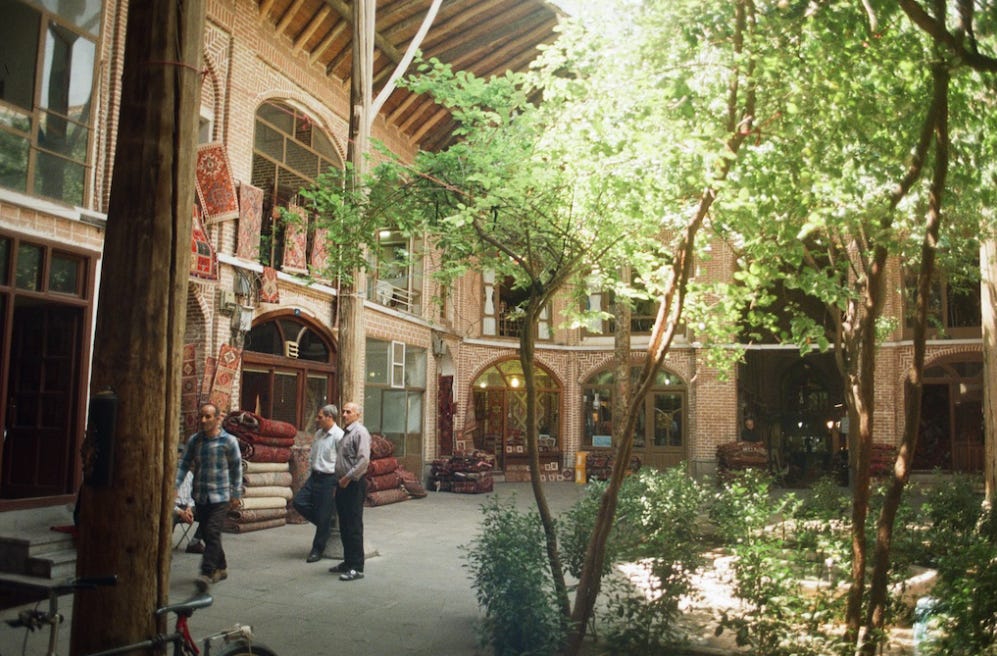
MATEUS: Dear Bahram, thank you so much for accepting my invitation to be part of this series of interviews. You have devoted your research to mapping the intellectual and political history that runs from Iran’s Constitutional Revolution to the more recent “Woman, Life, Freedom” movement. I’d like to start with something more personal.
We’ve known each other for a few years now. When I met you, I had absolutely no knowledge of Iran at all. My first impression, right away, was that you were an admirable man: it was obvious that you were as kind as a human being can be, while also being so curious, so open, so straightforward.
I could tell that you loved your country very deeply. Our conversations challenged every assumption I had taken for granted about Iran and the Middle East in general. And in times like ours — where the American-Israeli discourse on the current war, supposedly waged against the Ayatollah’s regime, has rapidly shifted from the old “our mission is to bring freedom abroad” to “we will bring hell on earth to Iran, and the world will silently watch a civilization die” — we must do all we can to oppose that narrative by taking seriously what Iranians themselves have to say about the vicious, simplistic dialectic at play.
On social media, people from all over the world constantly accuse Iran — both its politics and its many peoples — of being made up of fundamentalists, and even Muslims have taken part in this mischaracterization. I remember asking an Egyptian acquaintance about the religious differences between Iran and other Muslim countries, and he immediately snapped back: “Oh, those guys are simply crazy heretics!” A very instructive interaction, as you can see.
But your life story showed me a very different picture. Before we move to the historiographical and analytical part of the interview, would you mind telling us a little about what it was like being raised in Iran? Where are you originally from? What kind of relationship do most people there have with Islam? Based on your experience, how curtailed is freedom in practice — whether from above (say, the morality police) or from below (intolerant segments of the faithful)?
I know this lived reality partly prefigures your concerns with the distance between the regime and the people, which you’ll address at length later in the interview. Could you also introduce readers to some of the broader aspects of Iran’s institutional and national character? How many languages and peoples make it up, and for how long? How old is the theocratic polity, what came before it, and in what ways is Iran so different from its neighbors?
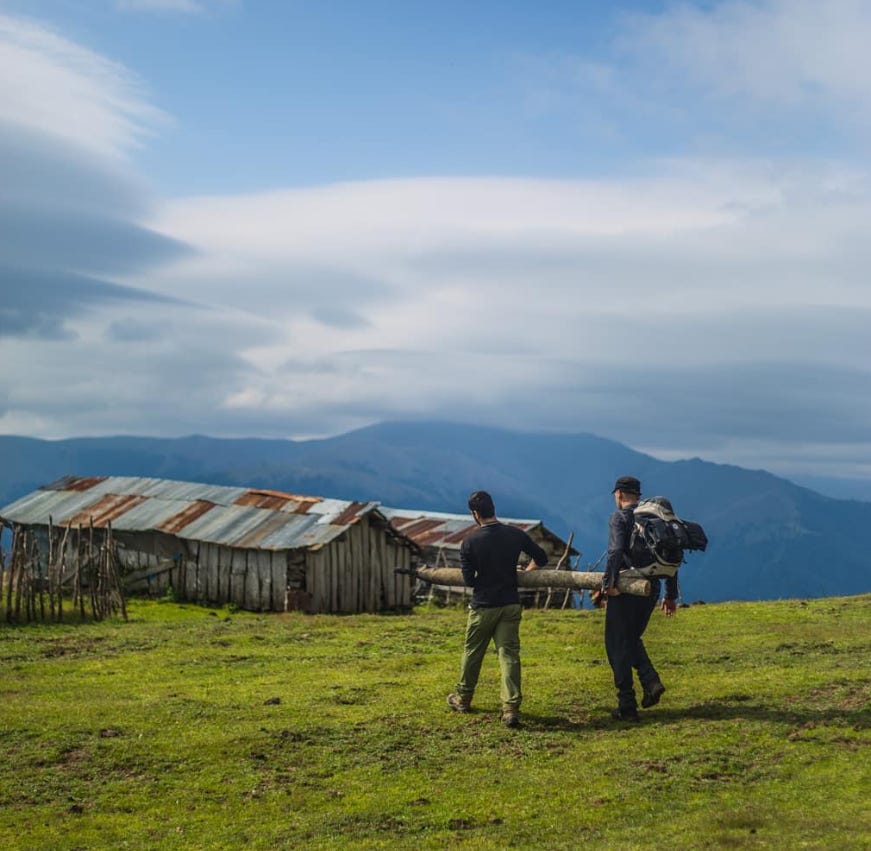
BAHRAM: Thanks, Mateus — you are as kind in words as you are in person. I’m originally from Qom, a city about 100km south of Tehran, sometimes called the “capital of Shia Islam” and considered by many in Iran to be the country’s most religious, and to some extent most conservative, city.
My family has mostly been very religious as well — mostly, because my father was an exception. While both my mother’s and father’s sides of the family were deeply religious, my father himself was not; religion never seemed to play an active role in his life.
Needless to say, between family, school, and neighborhood, I was raised as a devout Muslim too, and this upbringing shaped me directly for at least the first seventeen years of my life. That was up until the point when, after years of questioning things as a teenager, I decided to stop practicing Islam. This coincided with my move to Tehran to study for my bachelor’s degree. Even so, when the environment around you is largely religious, religion continues to play a role in your life whether you practice it or not. I’d say the majority of people in Iran are shaped by Islam in one way or another. It has been the religion of Iran for roughly 1,300 years, and Iranian culture has developed over that time in conjunction with Islam, producing some very interesting and unique mixtures of pre-Islamic and Islamic Iranian culture.
The question of freedom can only be meaningfully answered once we establish which framework we’re using to define it, since I think anyone who holds a religious or ethical framework tends to see themselves as free within it. I assume you mean “free” in the Western sense — the kind of personal liberties we find enshrined as rights in, say, the Universal Declaration of Human Rights or in the laws of many Western countries. In that sense, there were certainly a lot of restrictions growing up: the hijab requirement for women (and restrictions for men too — you can’t wear shorts outside as a man, for instance), taboos around tattoos, the enforced expectation of “respectful” interaction between genders, and the maintenance of public chastity — no holding hands, hugging, or kissing in public, and so on.
For the longest time I didn’t think of these as a lack of freedom, precisely because, as a practicing Iranian Muslim, I didn’t consider any of it unusual or negative. It was only after I stopped practicing that I began to feel their weight. Almost all of these restrictions and taboos have loosened over time: my generation felt them less than the previous one, and the next generation feels them significantly less still, largely thanks to the Woman, Life, Freedom movement.
As I got older, past my teenage years, liberties like freedom of speech and political expression also became important to me. I personally never got in trouble, but there was always the fear that I might. I remember giving a presentation at the university when I was younger arguing that the Iranian “Islamic Republic” is not really a republic but a dictatorship. I received applause from most of the students, though a few also challenged me. During this same period, though, protests were being crushed, and there have always been political prisoners. So while I personally stayed out of trouble, that doesn’t mean there was freedom. I share my own experience to make a point: it’s a grey area. There is no total freedom, and no total lack of it either.
I was also lucky with my family. Even though they were quite religious, I never ran into much trouble with them: when I stopped practicing Islam, I told my mother, and while she was apprehensive at first, it never caused a rift between us. When I told her I had a girlfriend, she was again surprised — perhaps a bit taken aback — but she adapted and accepted it, recognizing “that’s how things are in this age.” This isn’t a universal experience, again — it’s grey. Some families take such things for granted, the more liberal or irreligious ones; in stricter families, the same things would be unacceptable, and one could get in real trouble for them.
Depending on how loosely one defines “government,” I’d say Iran is the longest continuously governed land in the world — continuous in the sense that it has always been ruled as Iran, under the same name, albeit with historical variations (during the Achaemenid era it was called Aryānām; the Sassanids called it Iranshahr; in Zoroastrian texts it appears as Airyanem Vaejah or Iranvij). In that sense, Iran is at least 3,000 years old. There is, of course, little similarity between the Iran of 3,000 years ago, under the Medes, and the Iran of today — but I’d say there is something like a collective consciousness, a collective memory if you will, of those 3,000 years: a rough sketch of it, passed down through all the usual channels folk memory travels.
For most of its history Iran was a monarchy, most famously known for the royal title Shahanshah — King of Kings. This was not merely a claim to superiority; it reflected how Iranian monarchs actually ruled. When they conquered an empire or territory, they didn’t remove its existing kings — they let them remain as kings subservient to the Shah.
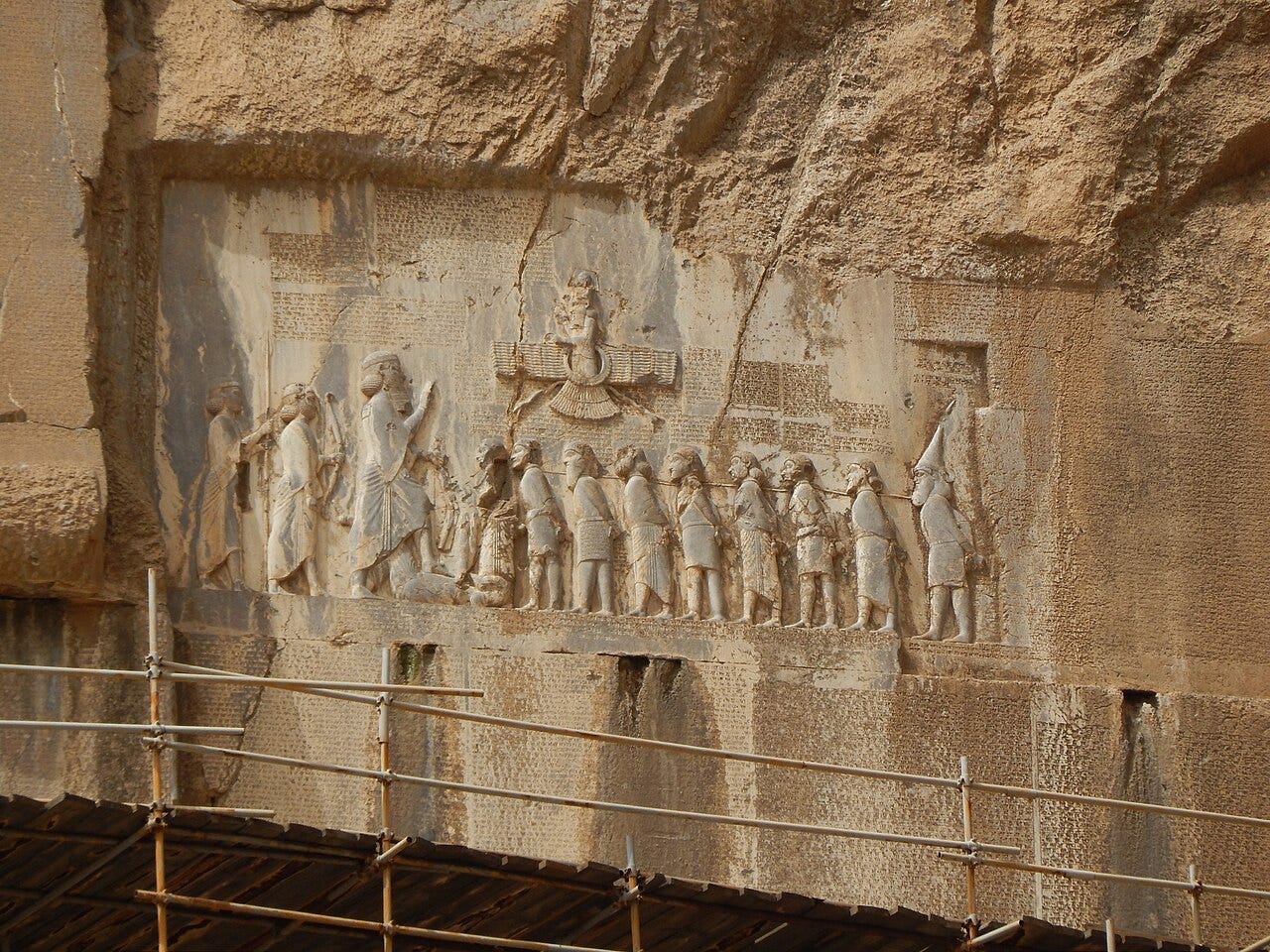
Before the Islamic conquest, Zoroastrianism was already the state religion of the empire, to varying degrees across different periods. Historians generally identify the Sassanian era as the period when the empire most deeply integrated Zoroastrianism into its bureaucracy and governance. After the Islamic conquest, Islam replaced Zoroastrianism as the state religion, again playing a varying role in governance over time. Even the Pahlavis — the last Iranian monarchs, often remembered as secular — were in fact quite religious, and religion played a significant role in their own narrative as well, though perhaps less so than for earlier monarchs. Today, of course, the state is deeply religious.
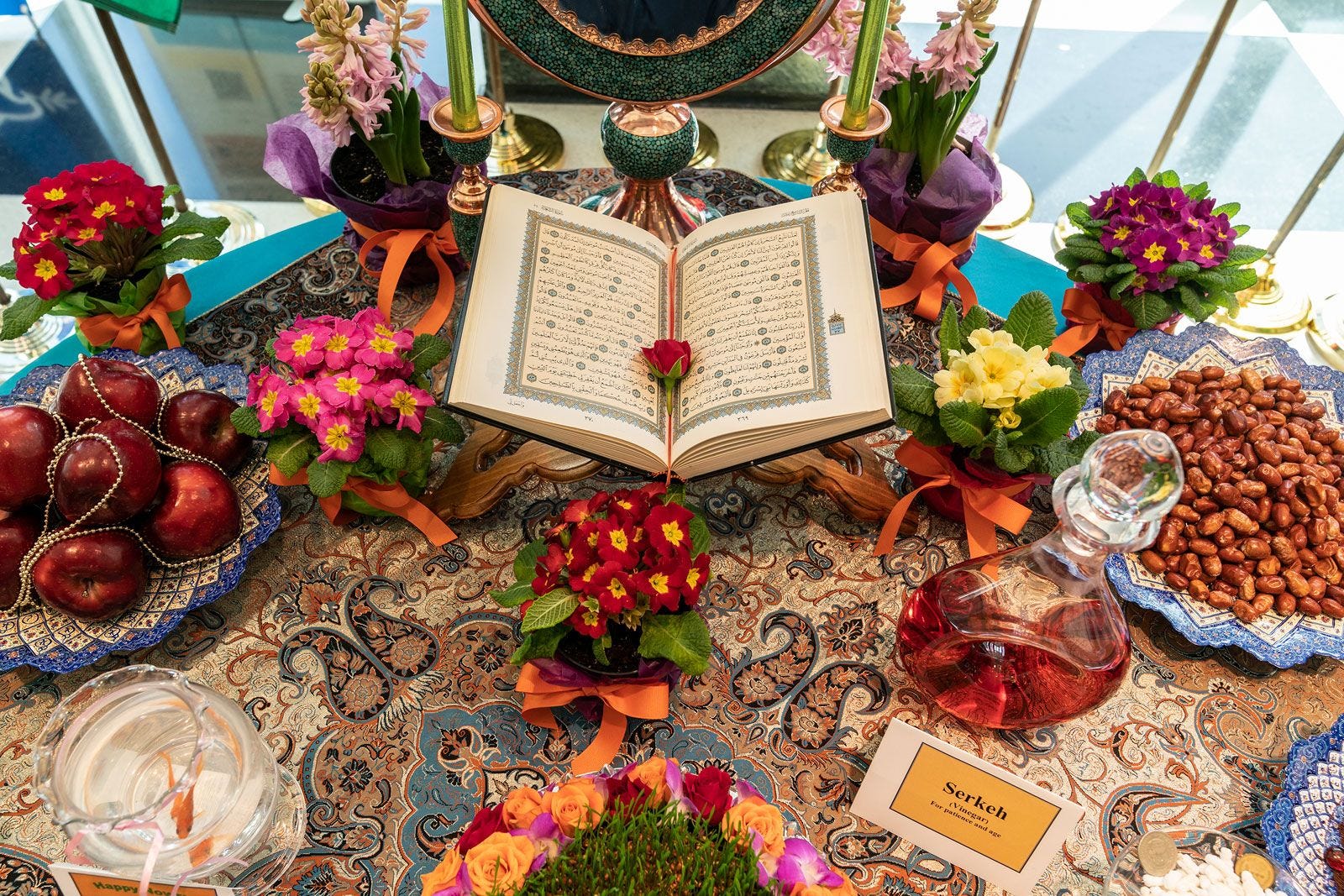
Iran’s diversity of peoples and languages is something I’ve only recently come to fully appreciate. Growing up, I’d seen the images on TV of Iranian peoples in traditional dress, dancing, cooking — especially during Nowruz, the Iranian new year, when a program would always feature people from different groups dressed in their traditional clothes, dancing, sometimes singing in their native tongues. There are too many groups to name them all, but the largest are the Persians (Fars, as we call them locally), comprising nearly 50% of the population; the Azeris (also called “Turks” in Iran, not to be confused with the Turks of Türkiye), who speak Azerbaijani — there are in fact more Azeris in Iran than in the Republic of Azerbaijan itself, which for most of Iran’s history was part of Iran (its name, incidentally, comes from a Persian word referring to Zoroastrian flame-keepers); and the Kurds, who are themselves divided into groups speaking different, largely mutually unintelligible languages — there are three Kurdish languages, as far as I am aware. There are also the Baluchis, whose language is closer to Persian than the others, followed by smaller groups such as the Lurs (very close to Persians), Turkomans (another, much smaller Turkic group), Arabs, Mazanis, and Gilakis, among others.
I think this diversity, combined with a national identity that genuinely encompasses all these groups, is one of the things that sets Iran apart from its neighbors. The idea of Iranian national identity — looser before the modern era, stronger after — has long been shaped by common culture and customs, a shared language (Persian or its sister languages), and large empires that facilitated trade and exchange. Many of Iran’s current neighbors were once part of this shared culture and identity, before being separated from it in the modern era: Iraq, Azerbaijan, Armenia, Georgia, the Kurdish part of eastern Türkiye, Afghanistan, western Pakistan, Bahrain, and parts of the other side of the Persian Gulf. After separating, many of these countries attempted to forge a unified culture and language into a new national identity. This worked for the smaller ones, largely confined within more easily identifiable ethno-linguistic borders, but the larger ones continue to ‘struggle’ with their internal diversity — Türkiye and Iraq being prime examples.
MATEUS: Thank you so much for this presentation. Shifting to the modern era, I think it is fair to say that in order to understand modern Iran, one must first understand its ‘traumatic encounter’, in Žižekian terms, with Western modernity. Though the nation was never sealed off from the rest of the world, it was around the early twentieth century, if I understand it correctly, that Iranian intellectuals — confronting the nation’s perceived backwardness relative to Europe — also began trying to forge a modern national identity, proposing many ways of conceptualizing it as a top-down goal.
This process isn’t unique to Iran, of course, as you have just mentioned. Jürgen Osterhammel, in his marvelous and enormous The Transformation of the World: A Global History of the Nineteenth Century, notes that nationalist intellectuals and their followers worked within imperial contexts to prepare the ground for independent nation-states. Inspired by the knowledge, frameworks, and political movements of the metropole, many important post-colonial politicians earned their degrees in Europe or the United States before returning home to promote a particular nationalist vision of sovereignty and institution-(re)building.
In another book, Decolonization: A Short History, Osterhammel traces the origins and spread of various anti-imperialist currents, highlighting one that was widely adopted: development theories holding that ethnic multiplicity and loose or polycentric spheres of sovereignty were obstacles to progress, both geopolitically and economically, and thus a hindrance to post-colonial de facto independence.


The Middle East, however, was a special case. Most countries in the region were not strictly colonized, though — especially after the fall of the Ottoman Empire — they were subject to substantial foreign control. Osterhammel notes that more radical nationalists and the Muslim Brotherhood emerged as new political actors starting in the 1930s, and that in the newly created mandate territories of the Middle East, Arab nationalism — a marginal and relatively unpoliticized phenomenon during the Ottoman period — became a mass movement, even as trans-national and trans-statist allegiance to Islam was being promoted at the same time, provoking a great deal of disturbance from the point of view of established post-colonial rulers.
In Iran, the story becomes even more complicated, owing to its religious particularities relative to other Muslim peoples, its ancient Persian cultural inheritance, and attempts to define its own hybrid of “Iranian Islamism” or “Islamic Iranianism.” This process eventually produced a profound psychological and cultural backlash. Central to this backlash is the concept of Gharbzadegi, often translated as “Westoxification,” which was taken up by intellectuals and political leaders alike.
Popularized by thinkers like Ahmad Fardid and Jalal Al-e Ahmad, and analyzed in depth by historians such as Ali Mirsepassi and Mehrzad Boroujerdi, the concept held that Iranians were losing their authentic selves through the blind imitation of the West. In your own mapping of Iranian national identity, you emphasize the enormous weight of Gharbzadegi, noting that this sense of being “intoxicated by Western ideas” was not merely an Islamist talking point — even the secular Pahlavi monarchy engaged with this discourse to some degree. Boroujerdi has even described the intellectual climate leading up to 1979 as the “tormented triumph of nativism.”
Could you walk us through this history? How did this deep anxiety over cultural authenticity prevent the formation of a stable, civic nationalism during the Pahlavi era? And what was the relationship between the Islamic Revolution and the political and cultural climax of the nativism that had been building for decades?
BAHRAM: There’s a lot to unpack here — and I say that non-exhaustively, because this subject can never really be exhausted!
Iranians first confronted their weakness relative to the European powers when they were forced to cede large parts of Iran to the Russian Empire, on top of humiliating economic concessions. This trend continued with the arrival of the British in the south, in the Persian Gulf. The incompetence of the Qajar-ruled Iranian empire at the time became obvious to all intellectuals, and as British involvement in Qajar affairs deepened, large-scale concessions — like the Reuter Concession — provoked revolts across Iran.
This tells us something important: even without a fully realized modern nation-state, Iranian civil society was already organized enough to mount revolts on a national scale, forcing the government to back down on those concessions. Whether such pushback actually served Iran’s long-term development is debatable — the concessions, though vast in scope and generating little direct income for the country, might have served as useful infrastructure development opportunities. But even at this early stage, before the word “Westoxification” was even coined, an aversion to it was already present.
From a personal, non-scholarly perspective, I’d say Iranians are — and have been for a long time — quite proud of our country’s history and culture, and of its record as the longest continuously standing ‘state’. I can easily imagine myself hearing about the Reuter Concession at the time and thinking: how humiliating!
Iranians eventually found a balance between the Russians and the British, playing the two off against each other to extract concessions from both sides while minimizing what they gave up. But in the end, the country was torn between Russian and British influence, and while Iran was never formally colonized, it’s hard to attribute much real sovereignty to the state during this period either.
The British secured more direct influence by replacing the Qajars — a vital step in protecting their interests in the Persian Gulf, where they had just discovered oil and established their first oil enterprise: the Anglo-Persian Oil Company, later renamed the Anglo-Iranian Oil Company, and eventually British Petroleum (BP), as we know it today.
Reza Khan, a Cossack Brigade commander, was backed by the British to stage a coup d’état and overthrow the Qajar dynasty. Deeply inspired by Atatürk’s secularizing and modernizing reforms in Türkiye, he initially wanted to establish a republic. But the British — who preferred a centralized state they could influence more directly — and the Iranian clergy, who felt threatened by the idea of secular republicanism, convinced him instead to preserve the monarchy and found a new dynasty: the Pahlavis.
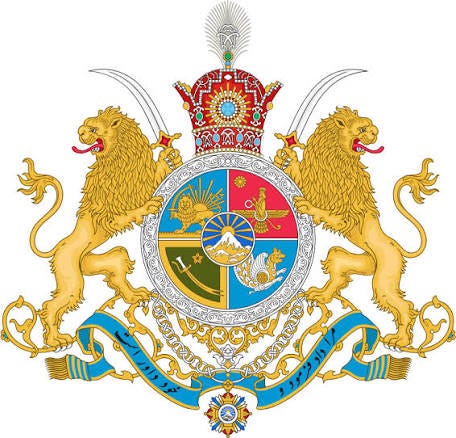
Interestingly, at this point the very idea of a “republic” had already become something one might call ‘Westoxified’: a republic was seen as a Western import, while monarchy was framed as the native mode of rule that had worked for the country for thousands of years. And so, in December 1925, Reza Khan became Shah Reza Pahlavi.
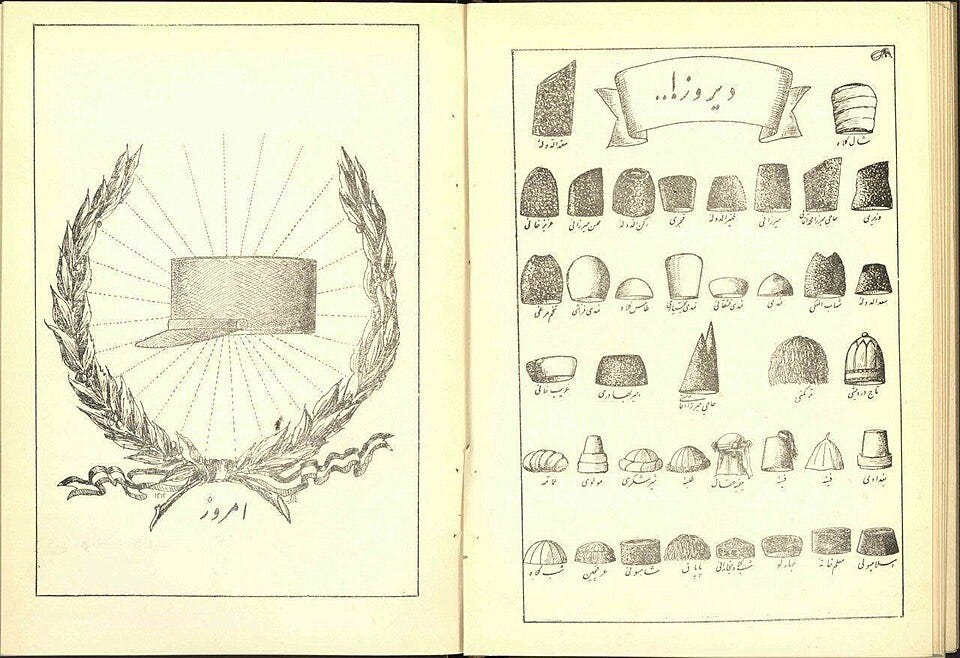
Although his republican ambitions failed, Reza Pahlavi didn’t abandon his effort to emulate Atatürk and rapidly modernize Iran: railways, schools, prisons, courts, hospitals, cinemas, and urban development all advanced quickly under his rule. Beyond material development, he also tried to secularize and unify the country, much as Atatürk had done. He launched a campaign to establish Persian as the standard language taught in schools and spoken nationwide, and he pushed back against local languages, customs, and cultures in an effort to unify everyone under a single Persian culture — one that, in his vision, looked much more European than before. Gone were Persian robes and traditional hats; people were told, and at times forced, to wear suits and what came to be known as the Pahlavi hat, itself modeled on Western headwear.

One of his most consequential and controversial cultural reforms was the prohibition of the hijab: Muslim women were forbidden from covering themselves in public.
Part of his cultural program involved building a collective consciousness around Iran’s ancient history, focused largely on pre-Islamic Persian culture. It was during this period that many Iranians became more familiar with, and developed a real pride in, their pre-Islamic heritage. Persepolis — one of the Achaemenid Empire’s capitals — became a symbol of Iranian national identity; government buildings echoed its architecture, and its imagery was etched into schoolbooks and, through them, into the formation of a national consciousness. Iranians who had gone through this schooling now shared a much larger overlap in their sense of national identity — more common reference points than before.
While Iranian national identity predates the modern era, Iran has, in a sense, always functioned as much like an identity as Europe is one: a large-scale, overarching set of values, histories, and cultures intertwined over a long period, sharing real commonalities while still being quite distinct region to region, with often stronger identities at the local level.
This has been true of Iran throughout its history. Before its establishment as a modern nation-state, Iranic peoples — and peoples under the influence of Iranian empires — shared overarching values, cultures, and histories intertwined for so long that they could, to some extent, identify with one another: through the shared celebration of Nowruz; through shared modal music systems (Dastgah and Āvāz); and through substantial overlap in their languages, via loanwords and the long-standing role of Persian as the administrative and courtly language not only of Iranian empires but, at times, of Turkic ones in the region as well.
Still, the spread of modern schooling made it possible to build a much more concrete, deeper, and more tightly-knit identity — one that could genuinely be called a nation in the modern sense of the word. That is what Reza Pahlavi, and later his son, set out to do.
While many of these changes were welcomed by many as improvements, other parts of them — the prisons, the secular courts, the bars, and the cultural reforms enforcing a Westernized dress code and way of life — were experienced by many as humiliating, an imposed sense of self-inferiority. Iranians were told they were backward, and that in order to progress, they had to abandon many of their values, customs, and ways of life. This is where the backlash against such reforms began to build — though slowly. It took years, well into the final years of Mohammad Reza Pahlavi’s reign and his White Revolution, before that backlash reached its boiling point and fed into the Islamic Revolution.